


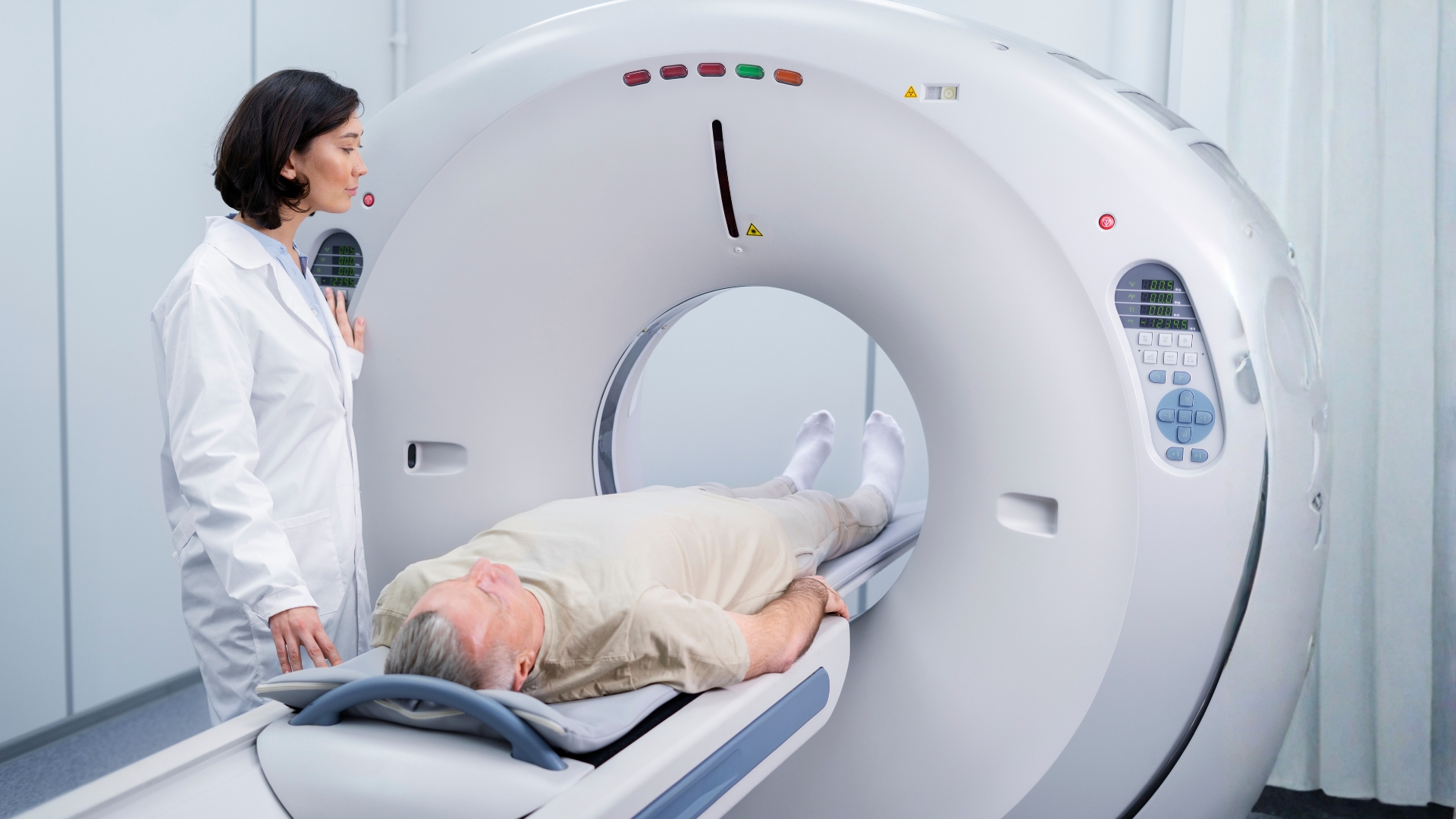
Lung cancer screening is often not a priority, even though the disease is frequently detected at an advanced stage. One of the recommended methods for early detection is a low-dose CT scan (LDCT), which can identify lung abnormalities even before symptoms appear. With this technology, the chances of detecting cancer at an early stage are higher, allowing for more effective treatment.
However, LDCT screening is not intended for everyone. It is generally recommended for individuals with certain risk factors, such as a history of smoking or exposure to harmful substances. So, who should consider undergoing lung cancer screening?
Who Should Get LDCT Screening?
Low-dose CT scan (LDCT) screening is recommended for individuals at high risk of lung cancer. Studies have shown that LDCT can detect lung cancer at an earlier stage compared to other methods, increasing the chances of successful treatment. Therefore, this screening is not for everyone, but specifically for those with higher risk.
In general, LDCT screening is recommended for:
Adults aged 50–80 years who are current smokers or former smokers who quit within the past 15 years
Individuals with a heavy smoking history (≥20 pack-years), equivalent to smoking one pack per day for 20 years or two packs per day for 10 years
Former heavy smokers who are still within the risk period, even if they have quit
Individuals who are generally in good health and able to undergo further tests or treatment if abnormalities are found
Screening may also be considered for individuals with additional risk factors, such as exposure to hazardous substances (e.g., asbestos), a family history of lung cancer, or chronic lung diseases like chronic obstructive pulmonary disease (COPD).
On the other hand, LDCT screening is generally not recommended for low-risk individuals, such as light smokers, those who quit smoking more than 15 years ago, or individuals with serious health conditions that may limit the benefits of screening.
Therefore, selecting candidates for LDCT screening should be done carefully based on age, smoking history, and overall health. Consulting a healthcare professional is important to ensure that the benefits outweigh the potential risks.
Benefits and Risks of LDCT Screening
LDCT screening is a non-invasive method that allows early detection of lung cancer, even before symptoms appear. It uses lower radiation compared to conventional CT scans, making it suitable for periodic screening. Studies show that LDCT improves the detection of early-stage lung cancer, especially stage I, which increases the chances of successful treatment and survival.
Additionally, LDCT screening can encourage lifestyle changes, such as quitting smoking, as individuals become more aware of their health risks.
However, LDCT also has some risks. Although the radiation dose is low, repeated exposure may still carry some risk. There is also a possibility of false-positive results, where abnormalities are detected but are not cancer, leading to unnecessary follow-up tests.
For this reason, the benefits of LDCT screening are generally greater for individuals at high risk. The decision to undergo screening should be made in consultation with a healthcare provider.
The Role of LDCT in Improving Survival
Low-dose CT scan (LDCT) has been shown to reduce the risk of death from lung cancer through early detection. Large clinical trials have demonstrated its effectiveness. The National Lung Screening Trial (NLST) found a reduction in mortality of about 20%, while the NELSON trial showed a reduction of 24–33% among high-risk populations.
Research also shows that most lung cancers detected through LDCT are in early stages (stage I–II), when treatment is more effective and potentially curative. Without screening, many cases are diagnosed at advanced stages, where treatment options are more limited and survival rates are significantly lower.
Therefore, early detection through LDCT is one of the most effective strategies to improve survival in lung cancer patients, especially when targeted at the right population.
Why LDCT Is Different from Regular Examinations
LDCT screening is different from conventional lung examinations, such as chest X-rays. It uses high-resolution imaging technology that can detect small nodules or abnormalities in the lungs, even before symptoms appear. In addition, the radiation dose is lower than standard CT scans, making it safer for regular use.
Unlike routine examinations that are usually performed after symptoms develop, LDCT screening is proactive. It is designed for individuals without symptoms but who are at high risk, such as current or former smokers. This approach allows lung cancer to be detected at an earlier stage, when treatment outcomes are much better.
Conclusion
Lung cancer screening with low-dose CT scan (LDCT) is an important step in early detection, especially for high-risk individuals such as current and former smokers. Studies show that LDCT can detect cancer at an early stage, improving treatment success and reducing mortality.
However, this screening is not for everyone. It should be done selectively based on age, smoking history, and overall health condition. Although LDCT offers significant benefits, it also carries risks such as radiation exposure, false positives, and overdiagnosis.
Therefore, the decision to undergo screening should be made in consultation with a healthcare professional to ensure the benefits outweigh the risks. When applied appropriately, LDCT screening can be an effective strategy to protect lung health and improve long-term outcomes.
However, imaging alone is often not enough. Further testing may be needed to better understand the characteristics of the cancer. Molecular testing plays an important role in identifying genetic changes that drive lung cancer, helping doctors choose more precise and personalized treatments.
KALGen Innolab, as a diagnostic laboratory, is committed to supporting lung cancer detection and management through comprehensive molecular testing services. With advanced diagnostic technology and experienced professionals, KALGen Innolab provides genetic tests that cannot be obtained through imaging methods like LDCT.
Combining imaging with molecular testing can provide a more complete understanding of a patient’s condition and help doctors determine the most effective treatment strategy. Early and accurate detection plays a key role in improving outcomes, as the decisions made today can significantly impact future health.
References
Cancer Treatment Centers of America. (n.d.). Low-dose CT scan for lung cancer detection. https://www.cancercenter.com/cancer-types/lung-cancer/diagnosis-and-detection/low-dose-ct-scan
Centers for Disease Control and Prevention. (2024, October 15). Screening for lung cancer. https://www.cdc.gov/lung-cancer/screening/index.html
de Koning, H. J., van der Aalst, C. M., de Jong, P. A., Scholten, E. T., Nackaerts, K., Heuvelmans, M. A., Oudkerk, M., et al. (2020). Reduced lung-cancer mortality with volume CT screening in a randomized trial. The New England Journal of Medicine, 382(6), 503–513. https://doi.org/10.1056/NEJMoa1911793
Mayo Clinic Staff. (2024, February 7). Lung cancer screening. Mayo Clinic. https://www.mayoclinic.org/tests-procedures/lung-cancer-screening/about/pac-20385024
Mayo Lung Screening Program. (2025). Risk-based lung cancer screening in clinical practice. Journal of Thoracic Oncology, 20(9), 1257–1267. https://www.sciencedirect.com
National Center for Biotechnology Information. (2013). Lung cancer screening with low-dose computed tomography for primary care providers. PubMed Central. https://pmc.ncbi.nlm.nih.gov/articles/PMC3755805/
National Lung Screening Trial Research Team. (2011). Reduced lung-cancer mortality with low-dose computed tomographic screening. The New England Journal of Medicine, 365(5), 395–409. https://doi.org/10.1056/NEJMoa1102873
U.S. Preventive Services Task Force. (2021). Screening for lung cancer: US Preventive Services Task Force recommendation statement. JAMA, 325(10), 962–970. https://doi.org/10.1001/jama.2021.1117